


These creamy mashed potatoes simmer in whole milk and chicken broth, then get mashed with butter and sour cream for a rich, comforting side dish. With simple ingredients and no draining, they’re a delicious addition to Thanksgiving, Christmas, or Sunday dinner.
Mashed potatoes are one of my absolute favorite sides. Give me a generous scoop with a little gravy and I’m happy! These are creamy, full of flavor, and always welcome on my holiday menu.
This recipe starts a little differently. The potatoes cook directly in milk and chicken broth instead of a pot of water. The milk adds richness, the broth brings savory flavor, and everything stays in the pot. A little butter and sour cream finish them off with extra creaminess and a touch of tang. The key is keeping the heat gentle and mashing only until the potatoes reach the texture you like. It’s a simple method, with a few details that make all the difference.
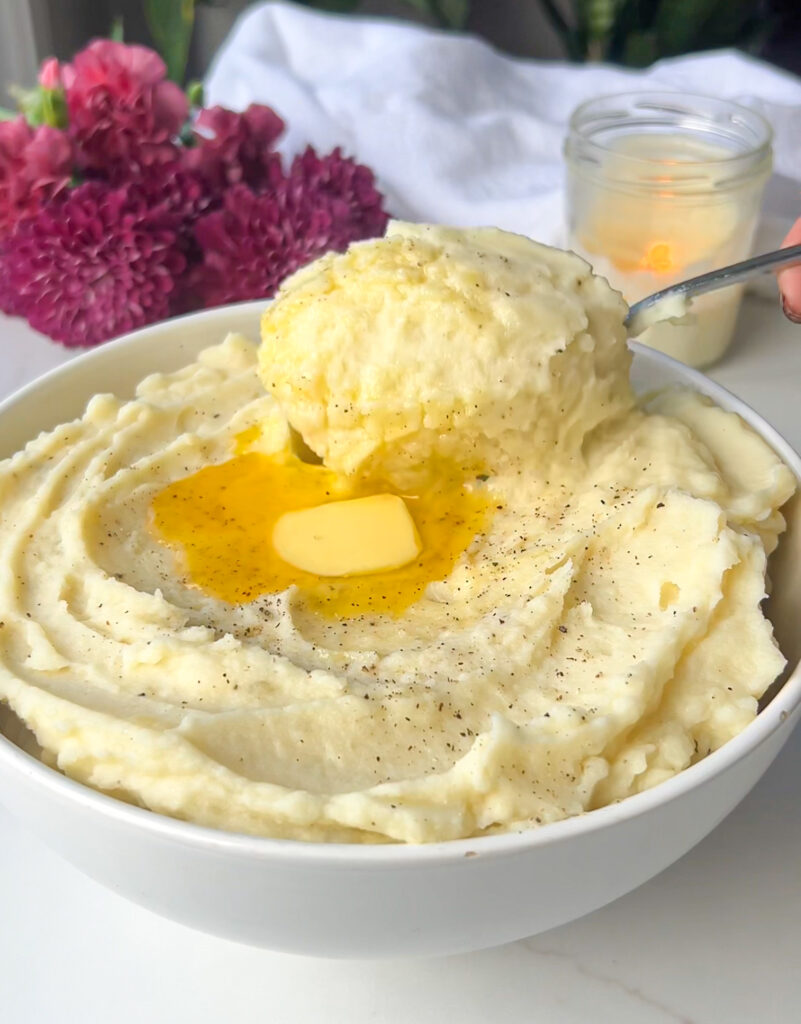
Why You’ll Love These Creamy Mashed Potatoes
- No draining: The cooking liquid becomes part of the finished mash.
- Savory flavor: Chicken broth adds another layer of flavor alongside the milk, butter, and sour cream.
- A short ingredient list: Just a handful of everyday ingredients, plus salt and pepper.
- A holiday classic: Serve them with turkey, ham, roast beef, or your favorite gravy.
- Easy to adjust at the end: A splash of warm milk can loosen the potatoes if you prefer a softer consistency.
Creamy Mashed Potatoes Ingredients
Potatoes: Use firm russet potatoes without green areas or sprouts. Peel and cut into evenly sized pieces so they cook at a similar rate.
Whole milk: Adds richness to the cooking liquid. Keep the heat gentle and stir along the bottom of the pot to help prevent scorching.
Chicken broth: Adds savory flavor. Broths vary in saltiness, so taste the finished potatoes before adding your final seasoning. Vegetable broth is an option if you want to make the dish vegetarian.
Butter: Two tablespoons add buttery flavor to the hot potatoes. The milk and sour cream contribute richness, too.
Sour cream: Adds creaminess and a little tang. It’s optional if you prefer to leave it out; adjust the consistency with a little warm milk if needed.
Salt and pepper: Start with the measured salt in the cooking liquid, then season to taste after mashing.

The Science That Makes These Mashed Potatoes Different
These mashed potatoes turn out incredibly silky because the potatoes simmer directly in milk and chicken broth instead of water. This method transforms the texture and gives you a naturally rich mash that tastes seasoned from the inside out. Here is what happens in the pot.
The starch absorbs liquid and swells
As the potatoes heat, their starch granules absorb water from the milk and broth and swell. This process, called gelatinization, is part of what changes their texture as they cook.
Milk fat adds richness
Whole milk contributes fat that gives the finished mash a richer flavor and creamier texture. Butter and sour cream add to that richness when mixed in at the end.
Chicken broth adds savory flavor
The broth contributes salt and savory flavor to the cooking liquid, which stays in the pot and becomes part of the finished mashed potatoes.
Released starch thickens the cooking liquid
As the potatoes soften and break apart, some starch releases into the milk and broth. That starch helps thicken the liquid, giving the finished mash body without a draining step.
Gentle mashing keeps the texture creamy
Fully tender potatoes need less work to mash smooth. Overmixing can release too much starch and make them gummy, so stop once you reach your preferred consistency.

How to Make Creamy Mashed Potatoes
1. Prepare the potatoes
Wash the potatoes before peeling, then cut into approximately 2-inch pieces. Keep the pieces as even as possible. There’s no need to rinse them again after cutting for this recipe.
2. Add the cooking liquid
Place the potatoes, whole milk, chicken broth, and 1/2 teaspoon salt in a large, heavy bottomed pot. Bring to a gentle simmer, watching carefully as the milk heats. Avoid a vigorous boil, which can cause the milk to foam up or scorch.
3. Cook until tender
Reduce the heat and simmer uncovered for about 25 minutes, stirring regularly and gently bringing the potatoes from the bottom toward the top. Scrape along the bottom of the pot as you stir to help prevent sticking.
The potatoes are ready when a fork slides through easily and the pieces begin to break apart. Cooking time can vary with the size of the pieces, the pot, and your stove, so use tenderness as your guide.
If the liquid reduces too quickly while the potatoes are still firm, add a small splash of warm milk and continue cooking gently. A little cooking liquid will remain when the potatoes are tender. Leave it in, as it incorporates into the potatoes during mashing. If there’s a large amount of liquid remaining, simmer uncovered for a few more minutes, stirring frequently, before mashing.
4. Mash and season
Remove the pot from the heat. Do not drain. Add the butter and sour cream, then mash until the potatoes reach your preferred consistency. A potato masher or hand mixer on low speed gives you control over the texture without vigorous mixing.
Taste and add salt and pepper as needed. If the potatoes are thicker than you like, gently fold in a little warm milk at a time. Serve warm.
Tips for the Best Mashed Potatoes
- Cut evenly: Similar sized pieces are more likely to finish cooking together.
- Use gentle heat: Milk needs more attention than a pot of water. Check regularly and stir along the bottom.
- Mash fully tender potatoes: Firm pieces are difficult to mash smooth. Give them more cooking time rather than trying to beat out the lumps.
- Avoid overmixing: Stop once you reach the texture you like. Skip the blender or food processor.
- Add warm liquid gradually: If you need to loosen the mash, start with a small splash of warm milk rather than pouring in a large amount.
- Season at the end: The broth contributes salt, so taste before adding more.
FAQs
Do I drain the potatoes before mashing?
No! A little milk and broth will remain when the potatoes are tender. Leave it in the pot, as it incorporates into the potatoes during mashing. If there’s a large amount of liquid remaining, simmer uncovered for a few more minutes, stirring frequently, before mashing.
Do I have to add sour cream?
No. It adds tang and creaminess, but you can leave it out. Taste the finished potatoes and adjust the seasoning and consistency as needed.
Why are my mashed potatoes lumpy?
The potatoes may need more time to cook. Check that the largest pieces are completely tender before mashing. Trying to smooth out firm pieces with prolonged mixing can overwork the rest of the batch.
Why did my mashed potatoes turn gummy?
Overmixing can release too much starch and create a sticky texture. Mash gently and stop once the potatoes reach the consistency you like. A blender or food processor can work them too aggressively.
What to Serve with Creamy Mashed Potatoes
For a holiday meal, pair these potatoes with Brown Sugar Glazed Ham and Autumn Brussels Sprouts Slaw. The fresh, crunchy slaw is a lovely balance to a creamy scoop of potatoes.
They’re also delicious with my Bacon Wrapped Beef Tenderloin Bites, roast chicken, pot roast, or meatballs. Add your favorite gravy and bring everyone around the table!
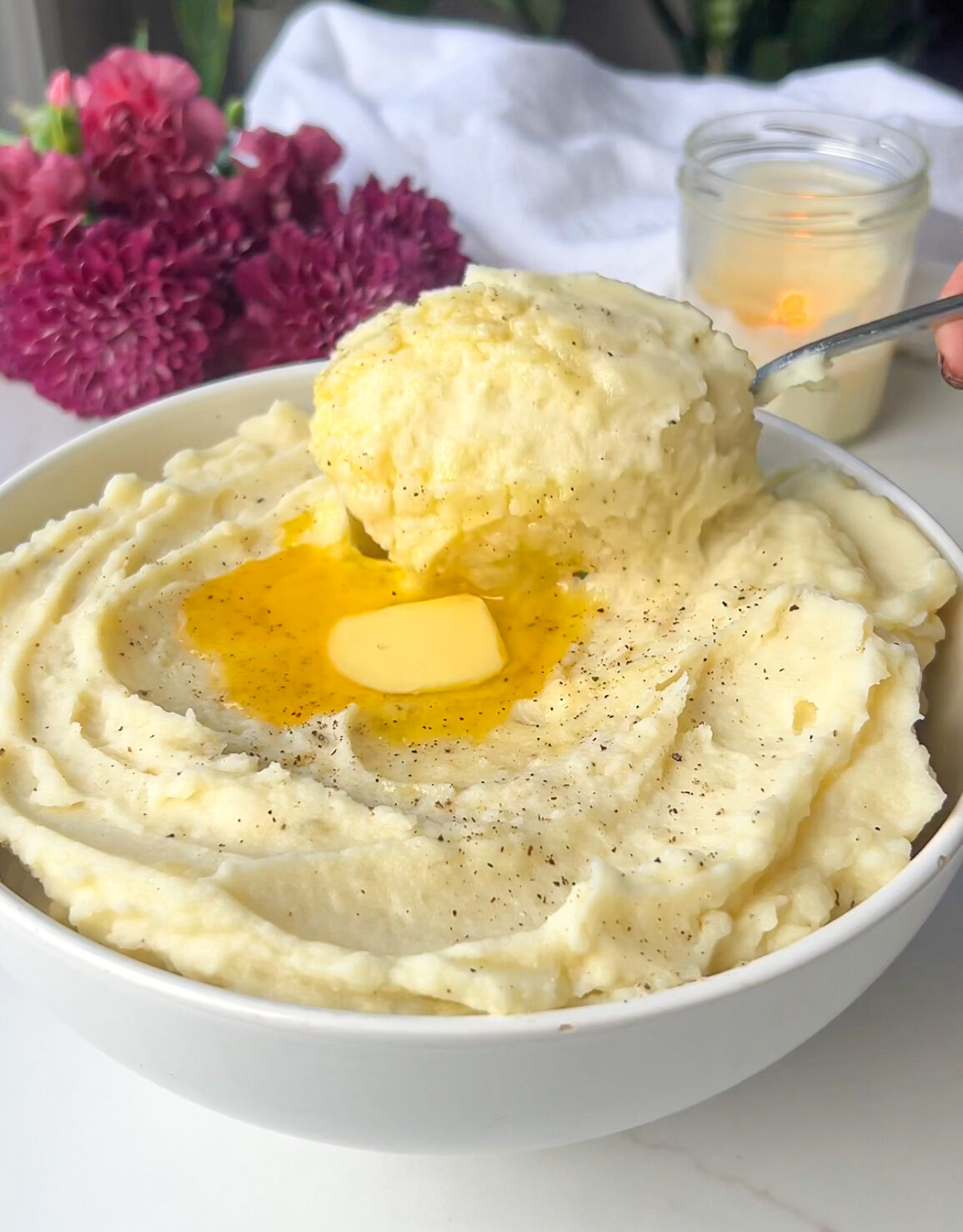
Creamy Mashed Potatoes
Ingredients
- 5 lbs russet potatoes
- 2 cups whole milk
- 1 cup chicken broth
- 1/2 tsp salt
- 2 tbsp butter
- 1/4 cup sour cream
- Salt & pepper to taste
Method
- Peel and cut the potatoes into 2 inch cubes. Do not rinse after cutting. You want the starch.
- Place potatoes, milk, chicken broth, and salt into a large pot. Bring to a gentle simmer.
- Reduce the heat and simmer uncovered for about 25 minutes, stirring regularly along the bottom, until the potatoes are fork tender and beginning to break apart. A little cooking liquid will remain and incorporate into the potatoes during mashing. If there’s a large amount remaining, continue simmering for a few more minutes, stirring frequently, before mashing.
- Remove from the heat. Do not drain. Add the butter and sour cream, then mash just until smooth and creamy. Season with salt and pepper to taste. Avoid overmixing.




What did you think?