



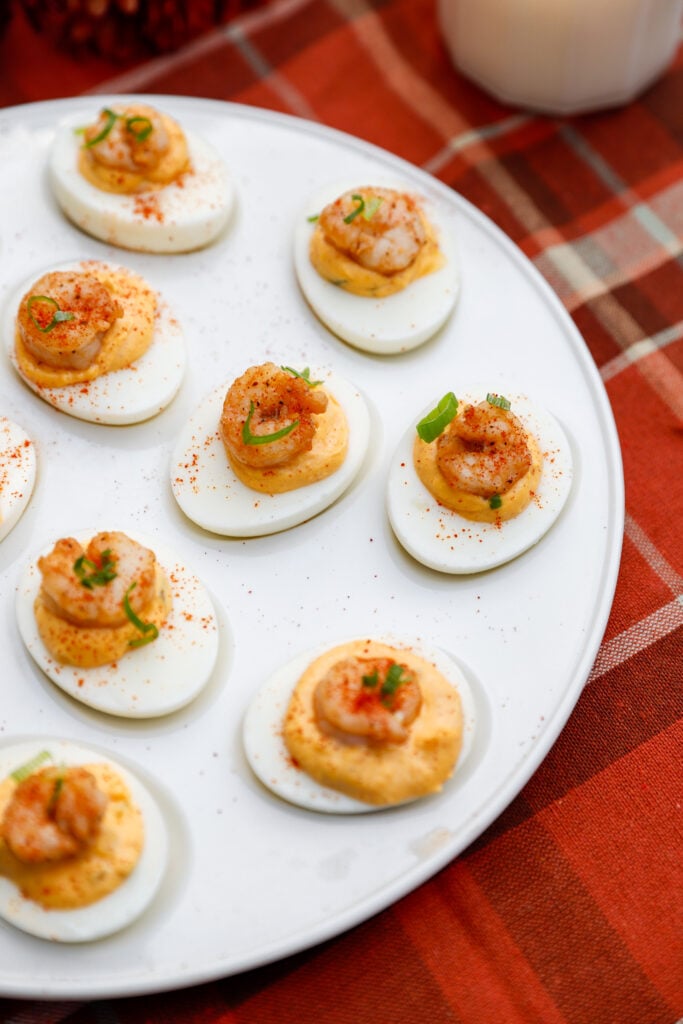
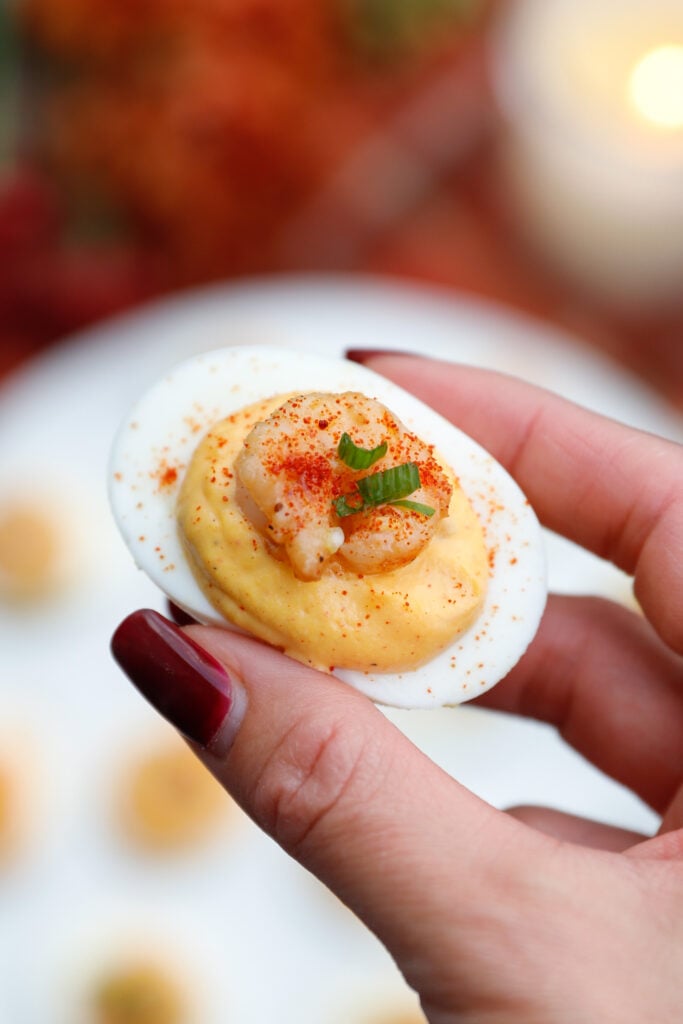
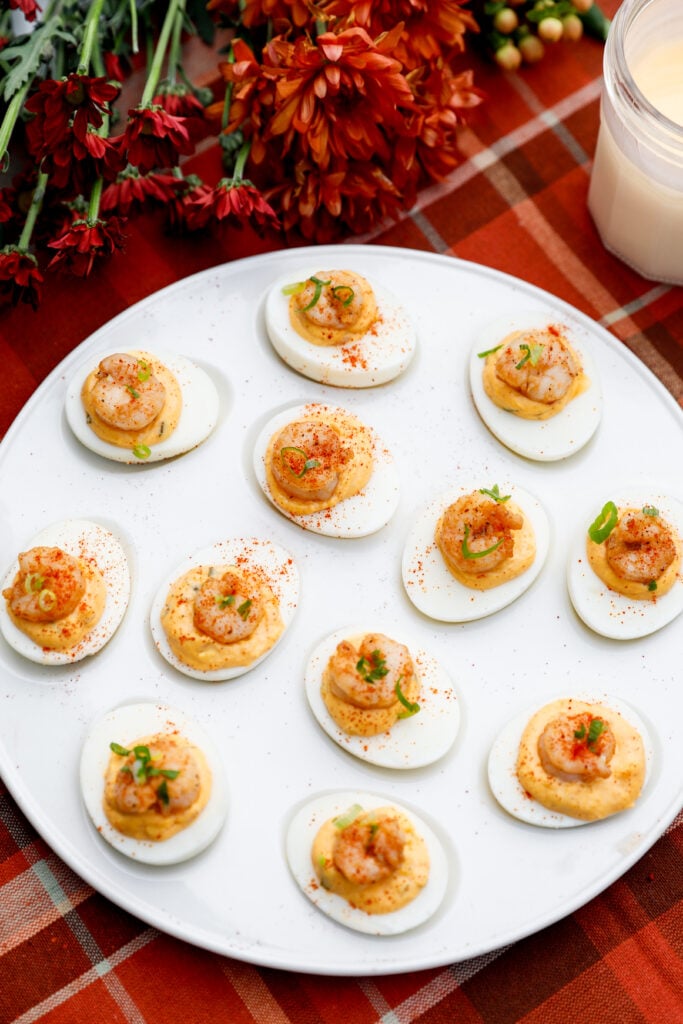
If deviled eggs always make it onto your holiday table, here’s a little twist to try. These shrimp remoulade deviled eggs have a creamy, tangy filling with Dijon, dill relish, a little horseradish bite, and a smoky hint of heat. Each half is topped with a buttery, Creole seasoned shrimp for an appetizer that feels special without being complicated.
These shrimp remoulade deviled eggs make a delicious appetizer for Thanksgiving, Christmas, Easter, or a dinner party. Prepare the eggs and filling ahead, then cook the shrimp and assemble close to serving.
Why You’ll Love These Shrimp Deviled Eggs
- A twist on a familiar appetizer: Remoulade style filling and seasoned shrimp bring something different to the table.
- Easy to portion: Six eggs make 12 filled halves.
- Flexible heat: Adjust the hot sauce to suit your guests.
- Make ahead friendly: Prepare the egg whites and filling the day before, then finish before serving.
Ingredient Notes and Substitutions
Eggs
Start with six hard boiled, peeled eggs. Slice them lengthwise and gently remove the yolks, keeping the whites intact.
Firm, fully cooked yolks mash into a filling that holds its shape. Pat any moisture from the egg whites before filling them.
Shrimp
I used small shrimp from a package labeled 70–90 count per pound and placed one shrimp on each deviled egg half.
I cooked about 30 shrimp, approximately 6 ounces, so there were extras to enjoy separately. The butter and seasoning amounts in this recipe are for that full batch.
Use peeled, deveined shrimp with the tails removed. If using frozen shrimp, thaw them in the refrigerator and pat them dry before cooking.
If you prefer larger shrimp, use one medium shrimp per egg half instead, adjusting the cooking time as needed.
Butter and Seasonings
The shrimp cook in butter with Old Bay and Tony Chachere’s Creole seasoning.
Both seasonings contribute salt, so I don’t add extra salt to the shrimp. If using different blends, taste before adding any more.
Let the shrimp cool before topping the eggs. They don’t need to be refrigerated until very cold first, since the butter can firm up as it chills.
Mayonnaise
Hellmann’s is my favorite, but use the mayonnaise you enjoy. Two tablespoons add creaminess while allowing the yolks and seasonings to shine.
Measure the mayonnaise rather than adding a generous scoop. Too much can soften the filling more than you want.
Dijon Mustard
Dijon adds tang and a little sharpness that balances the rich yolks and mayonnaise.
Dill Relish
Dill relish brings pickle flavor and texture to the filling. Drain it well before measuring so you add the relish without extra brine.
Finely chopped, well drained dill pickles can work as a substitute.
Horseradish
Use prepared horseradish for a little bite. Stir it before measuring and avoid scooping up excess liquid.
Creamy horseradish sauce is a different product and may change the filling’s flavor and consistency.
Hot Sauce
Use a hot sauce you enjoy. The amount in this recipe adds a little heat, but brands vary, so taste the filling before adding more.
Lemon Juice, Smoked Paprika, and Pepper
Fresh lemon juice brightens the filling, while smoked paprika adds a smoky note and warm color. A dash of black pepper rounds it out.
How to Hard Boil Eggs for Deviled Eggs
I learned this method from @justthebells10 on TikTok, and it’s the only way I’ve found that consistently makes my organic, pasture raised eggs easy to peel. I’ve adjusted it slightly: they let the eggs sit in the hot water for 3 minutes after boiling, but I’ve found mine need 4 minutes.
- Bring the water to a boil. Fill a saucepan with enough water to cover the eggs by about 1 inch and bring it to a boil.
- Add the eggs. Gently lower the eggs into the boiling water with a slotted spoon and boil for 8 minutes.
- Let them rest. Turn off the heat and let the eggs sit in the hot water for 4 minutes.
- Transfer to an ice bath. Place the eggs in a bowl of ice water for 12 minutes.
- Peel the eggs. Gently crack and peel the eggs, then rinse with water to remove any small pieces of shell. Pat dry before slicing.
How to Make Shrimp Remoulade Deviled Eggs
1. Prepare the Eggs
Slice the hard boiled eggs in half lengthwise. Gently remove the yolks and place them in a bowl.
Arrange the whites on a platter or in a covered container and refrigerate while you prepare the remaining ingredients.
2. Cook the Shrimp
Pat the peeled, deveined shrimp dry with a paper towel. Sprinkle with the Old Bay and Creole seasoning, then toss to coat evenly.
Melt the butter in a skillet over medium heat. Add the seasoned shrimp and cook, turning as needed, until firm, pearly, and opaque throughout.
Transfer to a clean plate, leaving excess butter behind, and let cool before topping the eggs.
3. Make the Remoulade Filling
Mash the six yolks thoroughly with a fork until fine and mostly smooth.
Add the mayonnaise, Dijon mustard, well drained dill relish, prepared horseradish, hot sauce, lemon juice, smoked paprika, and pepper.
Stir until creamy and evenly combined. Taste and adjust the pepper or hot sauce if desired, adding small amounts at a time.
The filling should be thick enough to hold a soft mound on a spoon.
4. Fill the Eggs
Spoon the filling into the egg whites, dividing it evenly among the 12 halves.
For a piped presentation, transfer the filling to a piping bag fitted with a wide opening. A small decorating tip can clog with pieces of relish.
5. Add the Shrimp and Serve
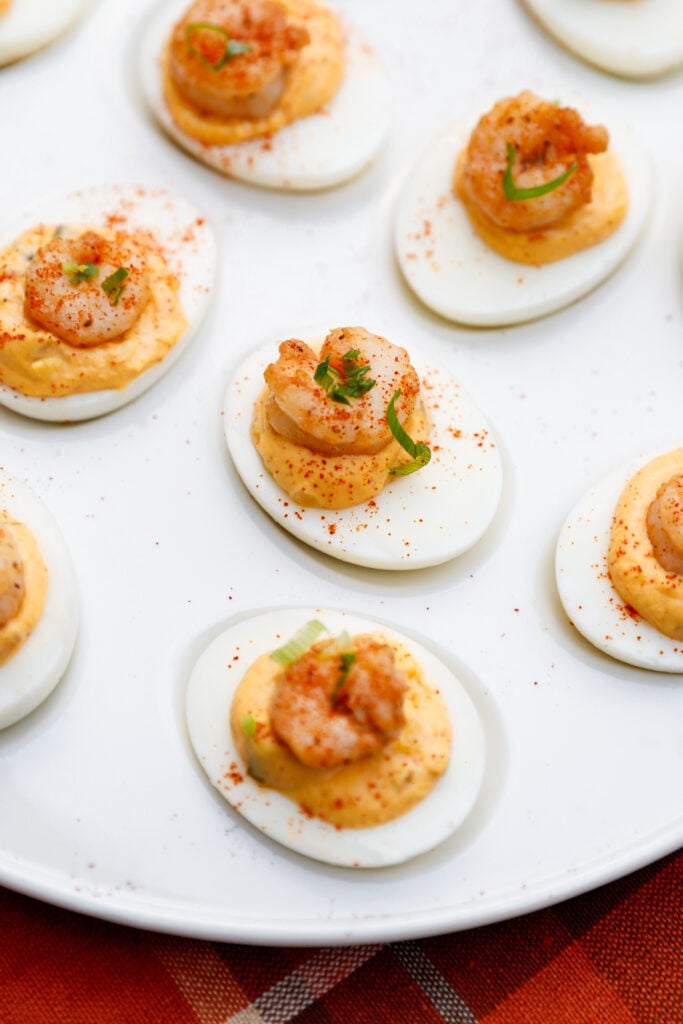
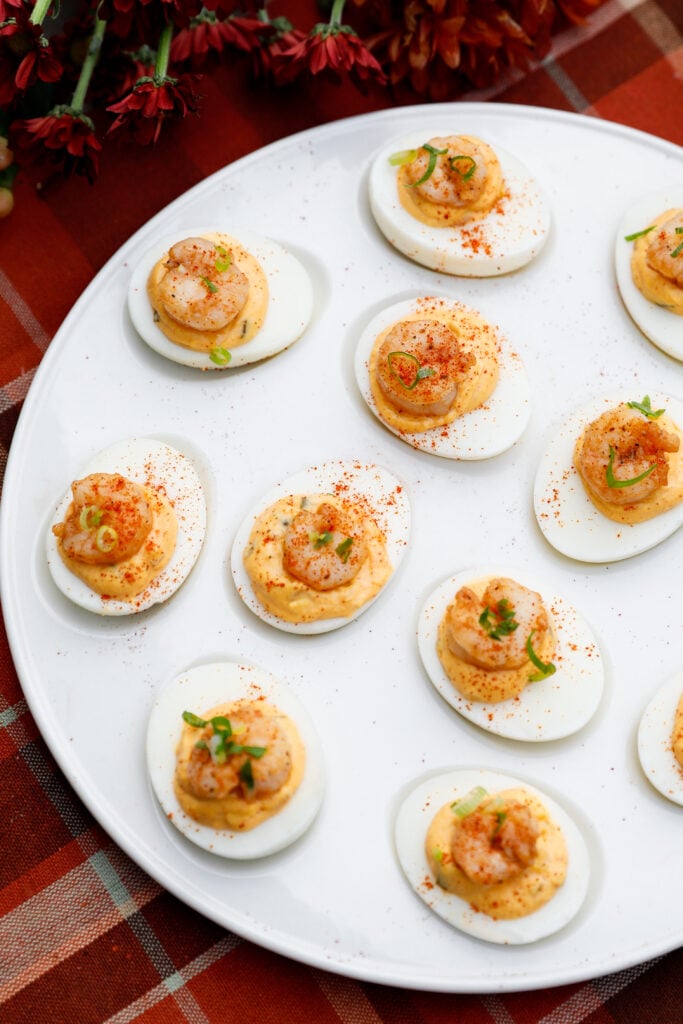
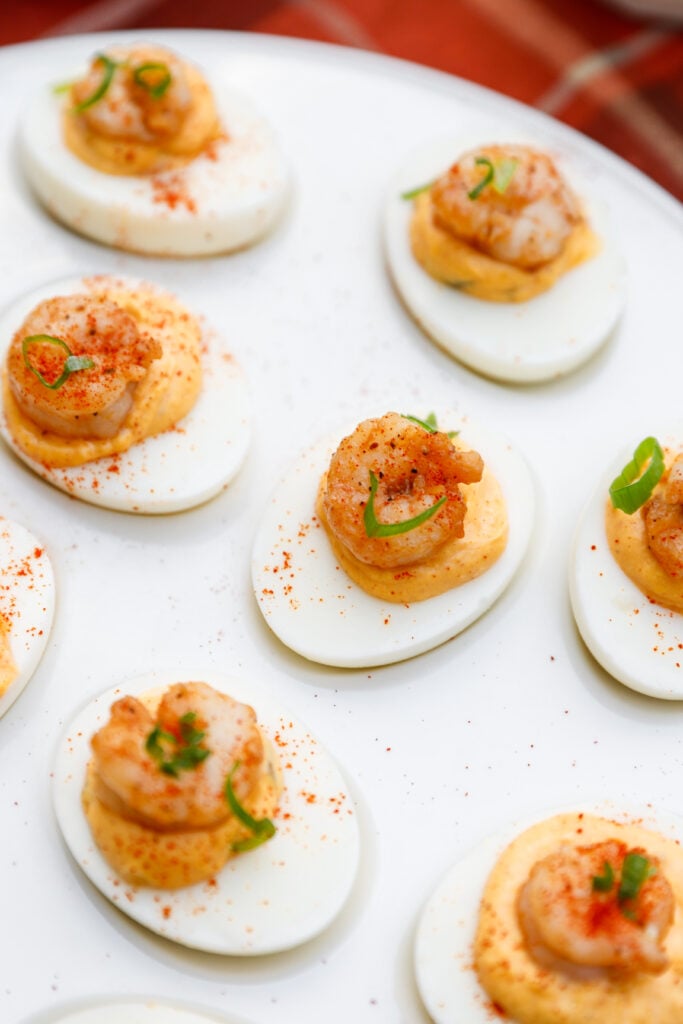
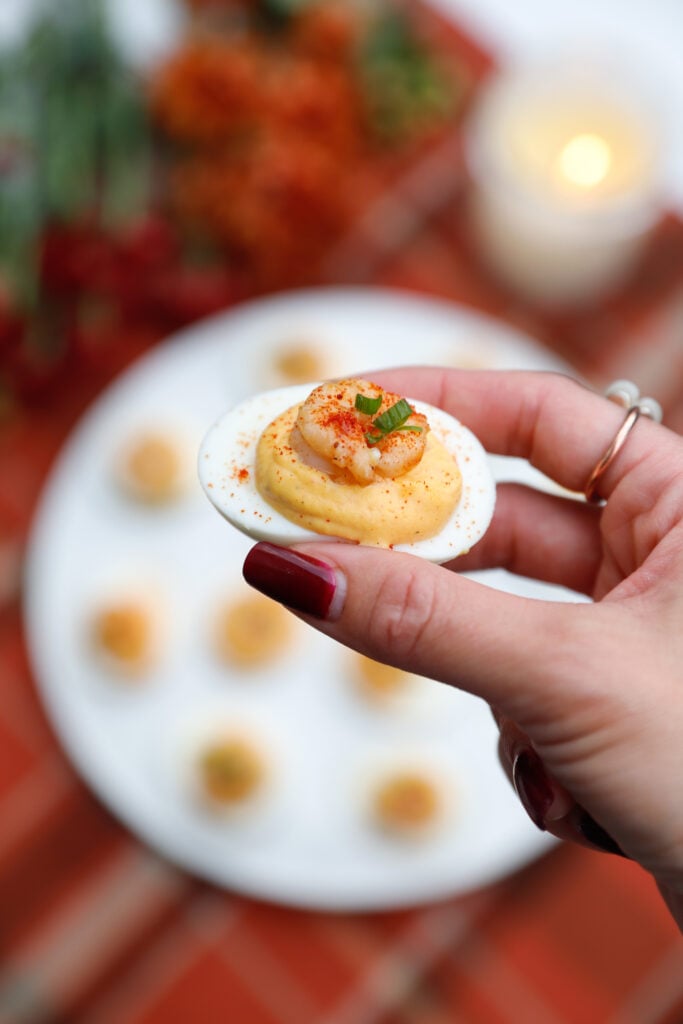
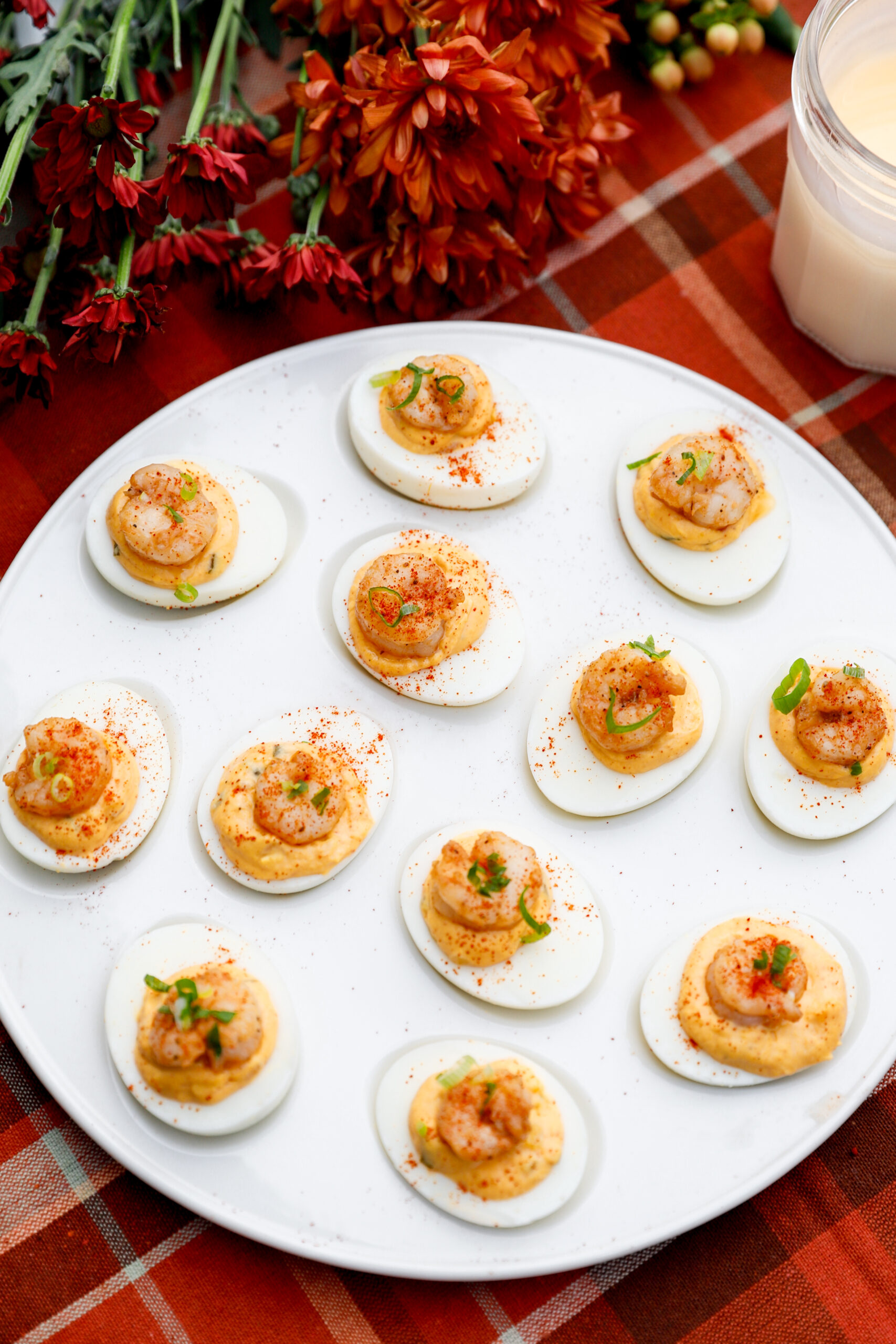
Top each half with one shrimp, then finish with finely shaved green onion and a light dusting of smoked paprika.
This recipe makes extra seasoned shrimp, which you can serve alongside or enjoy separately.
Serve the eggs after assembly, or cover and refrigerate if you aren’t serving them right away.
Tips for a Filling That Holds Its Shape
Drain the relish well. In a small batch, a little extra liquid can noticeably change the consistency.
Measure the wet ingredients. Start with the listed amounts of mayonnaise, mustard, lemon juice, hot sauce, and horseradish before making adjustments.
Mash the yolks first. Breaking them down before adding the other ingredients makes it easier to get a creamy filling without extra mayonnaise.
Chill the filling if needed. Refrigeration can help a soft filling firm up, but it won’t fully correct a mixture with too much liquid.
Leave excess pan butter behind. Use a fork or slotted spoon to transfer the shrimp so extra butter doesn’t collect on the eggs.
What If My Deviled Egg Filling Is Too Thin?
Start by refrigerating it to see whether it firms up enough to spoon into the whites.
If it’s still too loose, mash in an additional hard boiled egg yolk, a little at a time. This increases the amount of filling and slightly softens the seasoning, so taste again afterward.
For the next batch, drain the relish thoroughly and measure the liquid ingredients carefully. Avoid adding extra lemon juice or hot sauce until you’ve checked the consistency.
How Many Does This Recipe Serve?
Six eggs make 12 deviled egg halves, each topped with one shrimp.
Plan on about 2 halves per person when serving them alongside other appetizers, making this approximately 6 appetizer servings.
| Guests | Whole eggs | Deviled egg halves | Shrimp needed for topping |
|---|---|---|---|
| 6 | 6 | 12 | 12 |
| 12 | 12 | 24 | 24 |
| 18 | 18 | 36 | 36 |
The shrimp batch in this recipe makes about 30 shrimp, enough to top the 12 halves with extras left over.
If increasing the shrimp quantity, scale the butter and seasonings to match the amount of shrimp you’re cooking. For larger batches, cook in batches so the skillet isn’t crowded.
Can You Make These Ahead of Time?
For the best freshly cooked shrimp texture, prepare the eggs and filling up to one day ahead, then cook the shrimp close to serving.
- Egg whites: Refrigerate in a tightly covered container.
- Filling: Refrigerate separately in an airtight container or sealed piping bag.
- Shrimp: Cook the shrimp close to serving, let cool slightly, then add one to each filled egg half.
Keep the components refrigerated until needed, and refrigerate the finished eggs if you aren’t serving them right away.
Watch This Recipe
@megsescapadesHow to Store Shrimp Deviled Eggs
For the best shrimp texture, enjoy these deviled eggs shortly after assembly. Refrigerate leftovers promptly in a tightly covered container at 40°F or below and enjoy within 1–2 days.
At normal indoor temperatures, limit their total time out of refrigeration, including preparation and serving, to two hours. For a longer gathering, set out a small platter and replenish it with refrigerated eggs.
FAQs
What is remoulade?
Remoulade is a sauce with many variations. This recipe uses a creamy, Louisiana inspired combination of mayonnaise, mustard, relish, horseradish, hot sauce, and paprika mixed directly into the egg yolks.
Are these shrimp deviled eggs spicy?
They have a little heat from the hot sauce, horseradish, and Creole shrimp seasonings. The level depends on the brands you use. For a milder filling, start with less hot sauce and adjust after tasting.
What size shrimp should I use?
I used small shrimp labeled 70–90 count per pound, with one shrimp on each egg half. For a plumper, juicier bite, I’d choose medium shrimp next time. Use one per half and adjust the cooking time as needed.
Why does the recipe make extra shrimp?
I cooked about 30 small shrimp using the butter and seasoning amounts listed. You’ll only need 12 shrimp to top the eggs, so there will be extras to serve alongside or enjoy separately.
Can I freeze shrimp deviled eggs?
I don’t recommend freezing these, since hard boiled egg whites can become rubbery and watery after thawing. Instead, prepare the egg whites and filling up to one day ahead and refrigerate separately. Cook the shrimp fresh and assemble close to serving.
More Holiday Appetizers
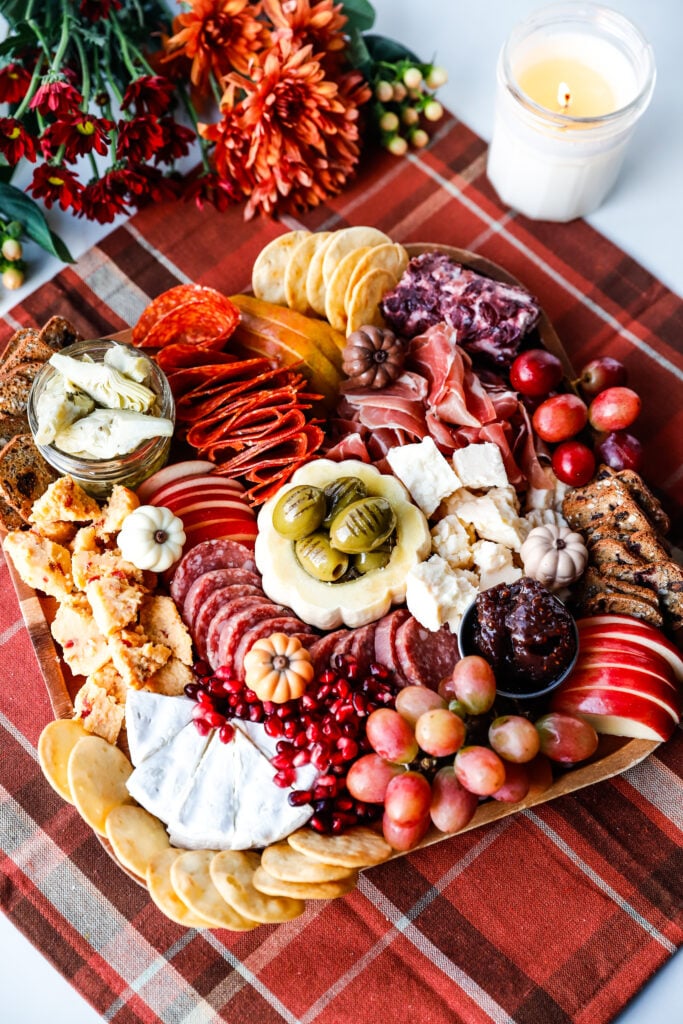
Round out your appetizer spread with my Easy Fall Charcuterie Board for something guests can graze on.
For a warm appetizer, try my Easy Garlic Parmesan Stuffed Mushrooms, Roasted Tomatoes with Burrata, or Bacon Wrapped Beef Tenderloin Bites.
Shrimp Remoulade Deviled Eggs
Ingredients
Eggs
- 6 large eggs
Shrimp
- About 6 ounces small raw shrimp approximately 30 shrimp, peeled, deveined, and tails removed; I used 70–90 count per pound
- 1 tablespoon butter
- 1/4 teaspoon Old Bay seasoning
- 1/4 teaspoon Tony Chachere’s Creole seasoning
Remoulade Filling
- 6 cooked egg yolks reserved from the eggs above
- 2 tablespoons mayonnaise
- 1 teaspoon Dijon mustard
- 1/2 tablespoon dill relish well drained
- 1/2 teaspoon prepared horseradish
- 1/2 teaspoon hot sauce
- 1 teaspoon fresh lemon juice
- 1/4 teaspoon smoked paprika
- Dash of black pepper
Garnishing
- Finely shaved green onion
- Smoked paprika for dusting
Method
Hard boil the eggs
- Bring a saucepan of water to a boil, using enough water to cover the eggs by about 1 inch. Gently lower the eggs into the boiling water with a slotted spoon and boil for 8 minutes. Turn off the heat and let the eggs sit in the hot water for 4 minutes.
- Transfer the eggs to an ice bath for 12 minutes. Gently crack and peel the eggs, then rinse with water to remove any small pieces of shell. Pat dry before slicing lengthwise. Place the fully set yolks in a bowl and refrigerate the whites while preparing the shrimp and filling.
Shrimp
- Pat the shrimp dry with a paper towel. Sprinkle with the Old Bay and Creole seasoning, then toss to coat evenly.
- Melt the butter in a skillet over medium heat. Add the seasoned shrimp and cook, turning as needed, until firm, pearly, and opaque throughout. Transfer to a clean plate, leaving excess butter behind, and let cool while making the filling.
Make the filling
- Mash the reserved yolks until fine and mostly smooth. Add the mayonnaise, Dijon mustard, drained dill relish, horseradish, hot sauce, lemon juice, smoked paprika, and pepper. Stir until creamy and evenly combined.
Fill and assemble
- Spoon or pipe the filling evenly into the 12 egg white halves. If piping, use a wide opening to accommodate the relish. Top each half with one shrimp, then finish with finely shaved green onion and a light dusting of smoked paprika. Serve the extra shrimp alongside or enjoy separately. If you aren’t serving the eggs right away, cover and refrigerate.





What did you think?