


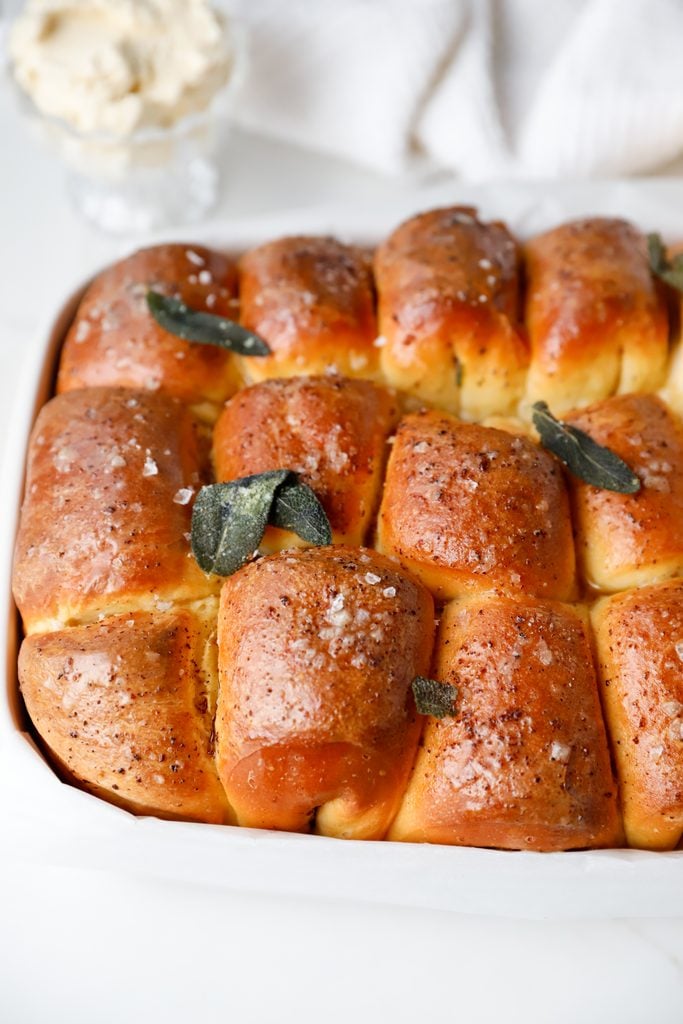
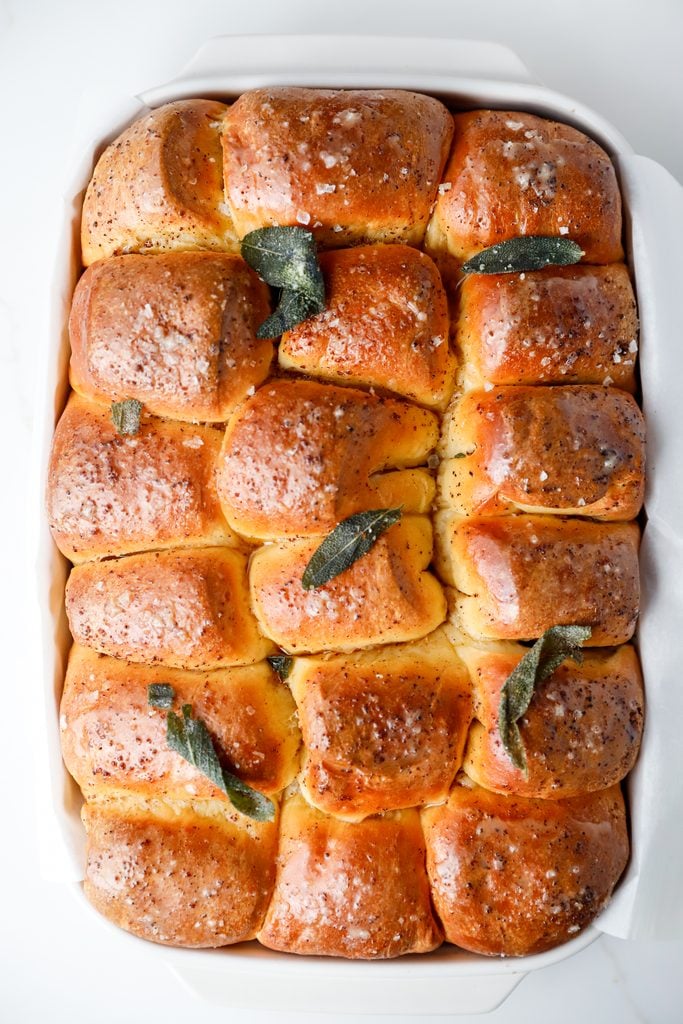
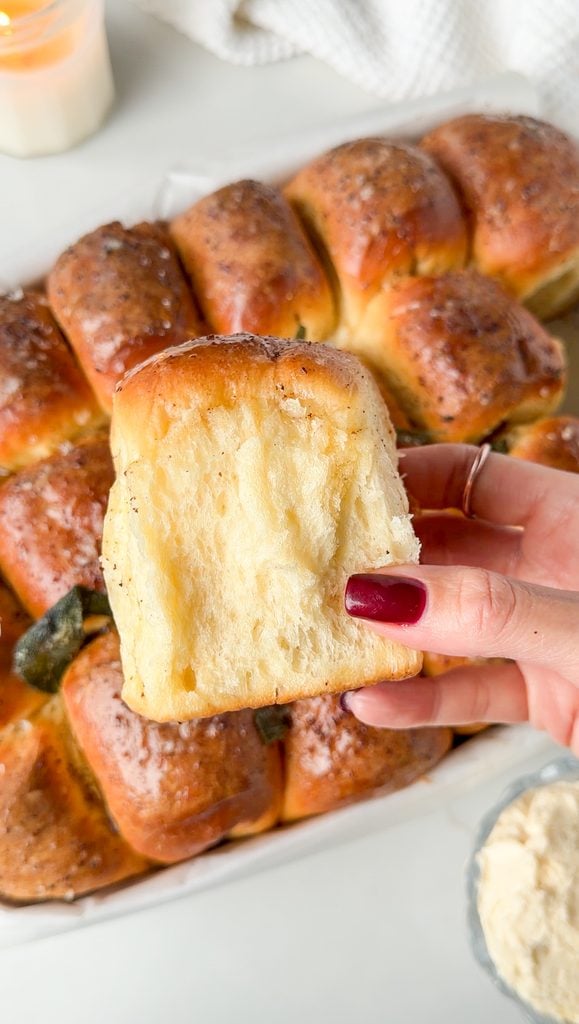
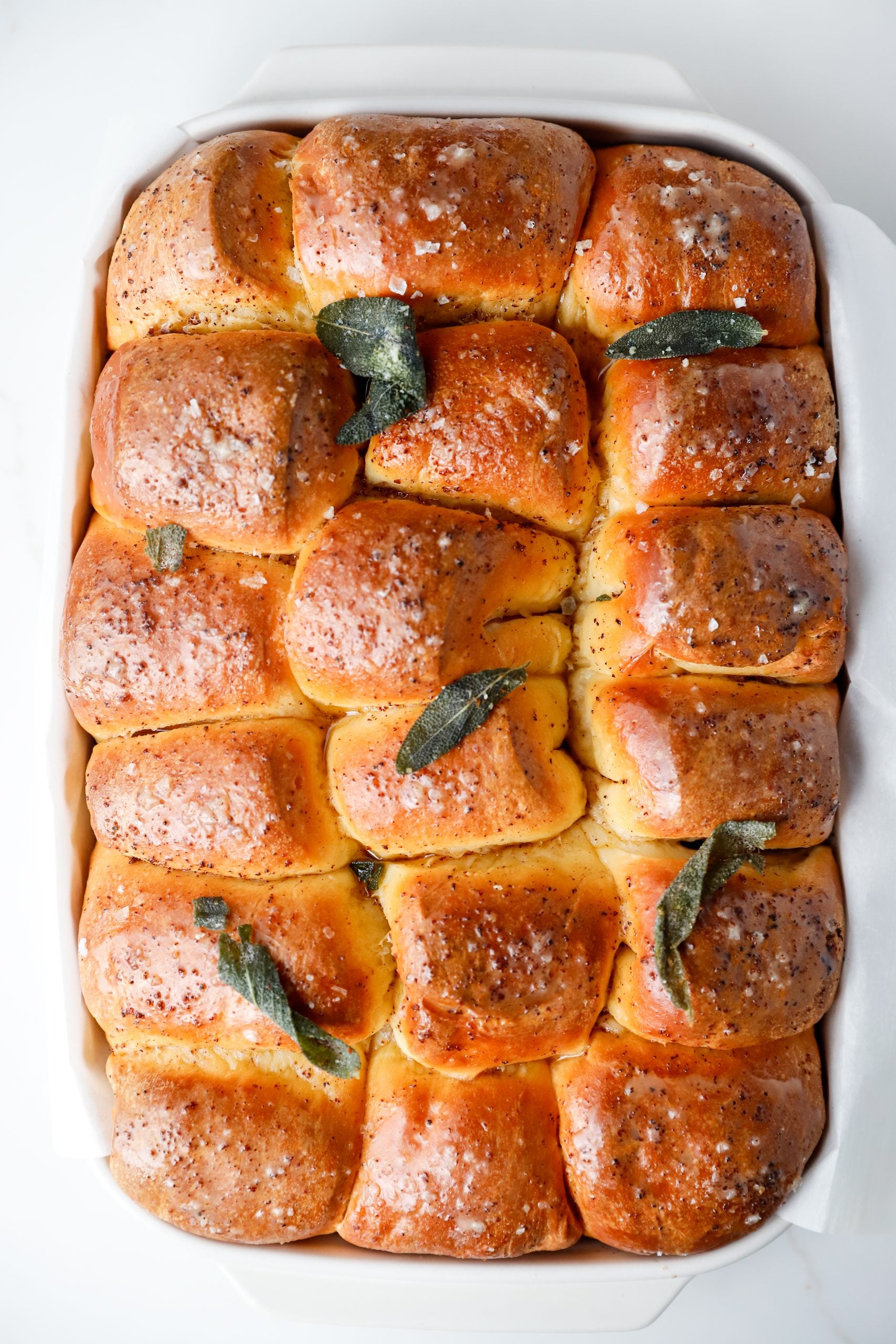
These Parker House Rolls with Sage Brown Butter are soft, fluffy, and folded with a buttery layer tucked inside. Fresh sage infuses the brown butter with savory flavor, and a bowl of whipped sage brown butter makes them even better served warm.
I’ve already made two batches and tucked them into the freezer for Thanksgiving. Having homemade rolls ready ahead of time is one less thing to think about when the kitchen is full!
For this recipe, I started with Food Network Kitchen’s Parker House roll dough and added sage infused brown butter for the folds and finishing. A portion of that same brown butter gets whipped with softened butter for serving, so you only have to brown the butter once.
Why You’ll Love These Parker House Rolls
- Soft, tender centers: Whole milk, eggs, and butter enrich the dough.
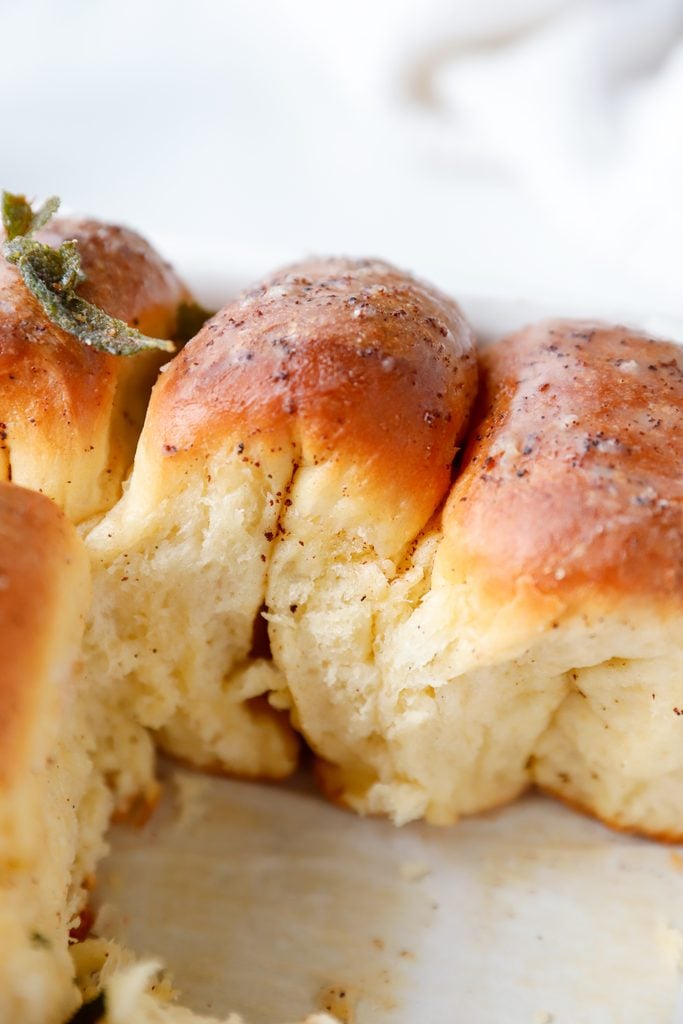
- A buttery fold: Each roll pulls apart to reveal a layer of sage brown butter.
- Familiar ingredients: No potato flakes or specialty flour needed.
- One batch of brown butter: Use it inside the rolls, brush it over the tops, and reserve a little for the whipped butter.
- A head start on holiday prep: Bake and freeze the rolls ahead, then warm before serving.
What Makes a Parker House Roll Different?
The signature detail is the fold. Instead of shaping the dough into balls, you brush it with butter and fold it over itself. That creates a tender, buttery seam that’s easy to pull apart.
For this version, the dough is cut into rectangles, folded, and nestled together in a baking pan. As the rolls rise and bake, they grow into soft pull apart rolls with golden tops.
Ingredients for Parker House Rolls
For the rolls
All-purpose flour: Spoon the flour into your measuring cup and level it off. Scooping directly from the bag can pack in extra flour and make the rolls heavier.
Whole milk: Adds moisture and richness. Heat it gently, then melt the dough butter into it.
Unsalted butter: The butter for the dough can be cold because it melts into the hot milk. Cutting it into small pieces helps it melt faster.
Active dry yeast: Let it stand in warm water until foamy before adding it to the dough. The water is part of the recipe, even though it’s easy to overlook when gathering ingredients.
Eggs: Use large eggs at room temperature, lightly beaten. To take the chill off quickly, place the uncracked eggs in warm, not hot, water for 5–10 minutes.
Sugar: Adds a little sweetness to balance the savory butter.
Kosher salt: Seasons the dough. Kosher salt brands vary in crystal size, so use the same brand consistently when making the recipe.
For the sage brown butter
Unsalted butter: You’ll brown 2 sticks plus 2 tablespoons, then divide the finished butter between the rolls and the whipped butter.
Fresh sage: Infuses the butter while it cooks. Remove the leaves before brushing so the rolls have sage flavor without pieces of herbs between the layers.
Flaky salt: A light sprinkle over the tops adds a little crunch and brings out the buttery flavor.
For the whipped butter
Reserved sage brown butter: Measure out ⅓ cup after browning, stirring first to include some of the flavorful browned bits.
Softened unsalted butter: Whipping the cooled brown butter with softened butter creates a fluffy, spreadable finish.
How to Make Parker House Rolls with Sage Brown Butter
1. Prepare the dough
Heat the milk until it just begins to simmer, then remove it from the heat. Stir in the butter and sugar until melted. Let the mixture cool until lukewarm.
Meanwhile, stir the active dry yeast into the warm water and let it stand until foamy.
Combine the milk mixture, yeast mixture, eggs, salt, and about half the flour in a stand mixer fitted with a dough hook. Gradually add the remaining flour and knead until the dough is smooth and elastic.
The dough should feel soft and slightly tacky. Avoid adding extra flour just to make it completely dry.
2. Let the dough rise
Place the dough in a lightly greased bowl, cover, and let rise until doubled. The timing will depend on the temperature of your dough and kitchen.
3. Brown the butter with sage
Melt the butter in a large, light colored skillet over medium low heat. Add the thoroughly dried sage leaves and cook, stirring frequently.
Remove the sage once crisp. Continue cooking until the milk solids are golden brown and the butter smells nutty. Immediately pour into a heatproof bowl, scraping in the browned bits.
Stir well and reserve ⅓ cup for the whipped butter. Let the remaining butter cool until it’s no longer hot but still easy to brush.
4. Roll, butter, and fold
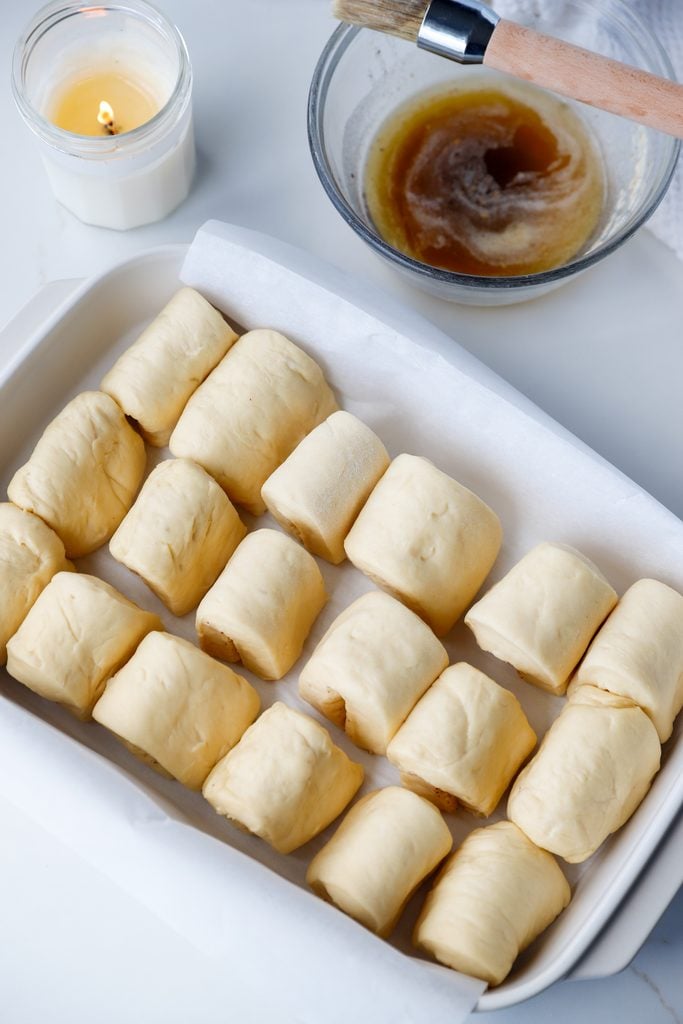
Gently deflate the risen dough and roll it into a 12-inch square. Brush with a thin layer of sage brown butter.
Cut into eighteen 4-by-2-inch rectangles. Fold each rectangle in half so the short ends meet, then arrange in the prepared pan with the folded edge facing up.
Lightly brush the tops with more brown butter.
5. Let rise again and bake
Cover loosely and let the rolls rise until very puffy. Sprinkle lightly with flaky salt, then bake at 350°F until golden brown and cooked through.
Check a center roll with an instant read thermometer. The bread should reach approximately 190°F. Brush the warm rolls with the remaining sage brown butter.
6. Whip the serving butter
Let the reserved brown butter cool until opaque and soft. Beat with the softened butter and fine salt until light and fluffy.
Spoon into a serving dish and serve with the warm rolls.
Tips for Soft, Fluffy Rolls
Let the milk mixture cool. It should be lukewarm before it meets the yeast and eggs.
Use the dough’s texture as your guide. Kneading time varies by mixer. Look for smooth, elastic dough that passes the windowpane test: gently stretch a small piece into a thin membrane that lets light through without tearing. If it tears easily, knead a little longer and check again.
Give the dough time to relax. If it springs back while you’re rolling it out, cover and rest it for 5–10 minutes before trying again.
Use a thin layer of butter inside the fold. You want an even coating rather than puddles.
Watch the butter closely near the end. Once the milk solids begin to brown, they can darken quickly. Transfer the butter out of the hot skillet immediately.
Stir before brushing. The browned bits settle to the bottom, so give the butter a stir each time you use it.
Check the middle of the pan. The outside rolls can finish before the center. If the tops are golden before the middle is done, loosely tent with foil.
How to Store and Freeze Parker House Rolls
Can I make these ahead for Thanksgiving?
Yes! I’ve made two batches and frozen them for Thanksgiving. Baking ahead lets you save the mixing, kneading, and rising for a quieter day.
How to freeze baked rolls
Let the rolls cool completely. Wrap tightly and place in a freezer safe bag or airtight container. You can freeze them together as a slab or in smaller portions.
For best quality, use within one month.
How to reheat
Thaw the rolls in their wrapping at room temperature. Remove any plastic, place in a baking dish, and cover with foil.
Warm at 300°F for approximately 15–20 minutes, or until warmed through. Smaller portions may heat faster. Brush with a little melted butter before serving, if desired.
How to store leftovers
Store cooled rolls in an airtight container at room temperature for up to 2 days, or freeze for longer storage.
Can I make the whipped butter ahead?
Yes. Prepare it up to 3 days ahead and refrigerate in a covered container. Let soften, then briefly rewhip before serving. Store separately from the rolls.
What to Serve with Parker House Rolls
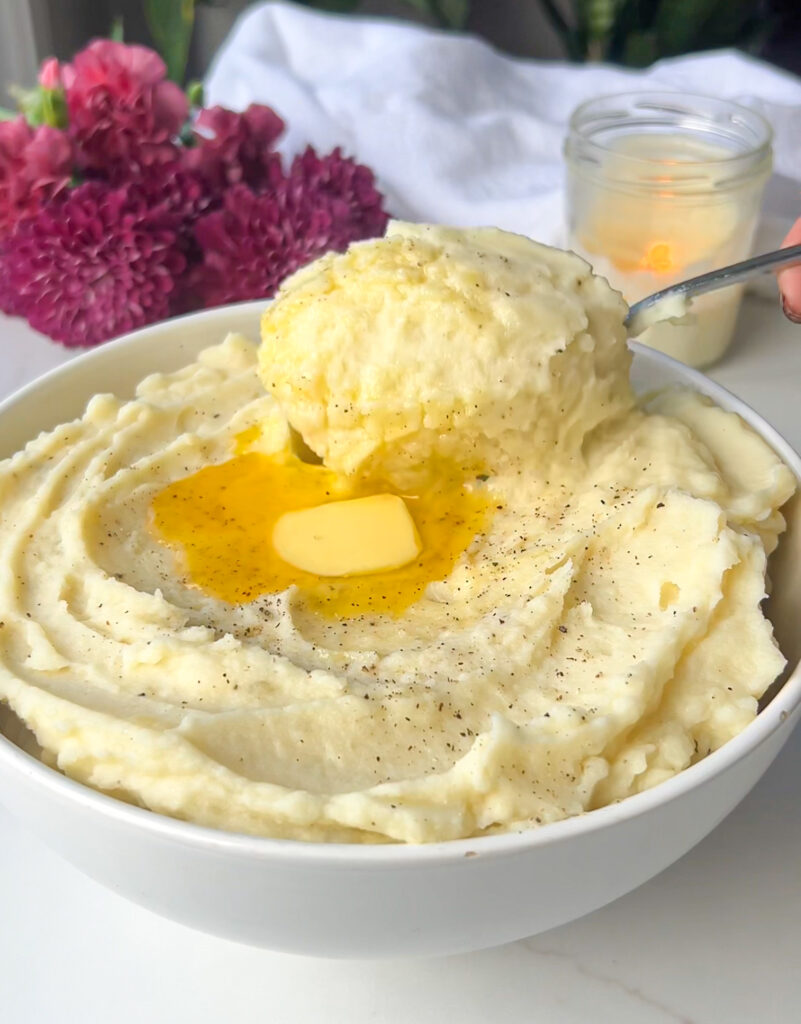
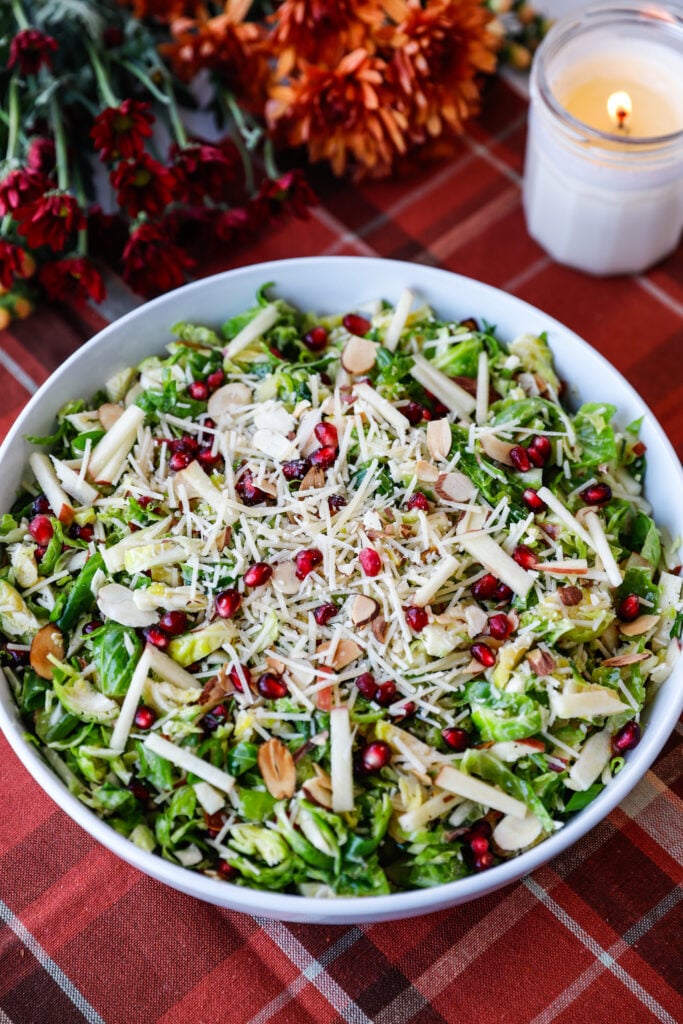
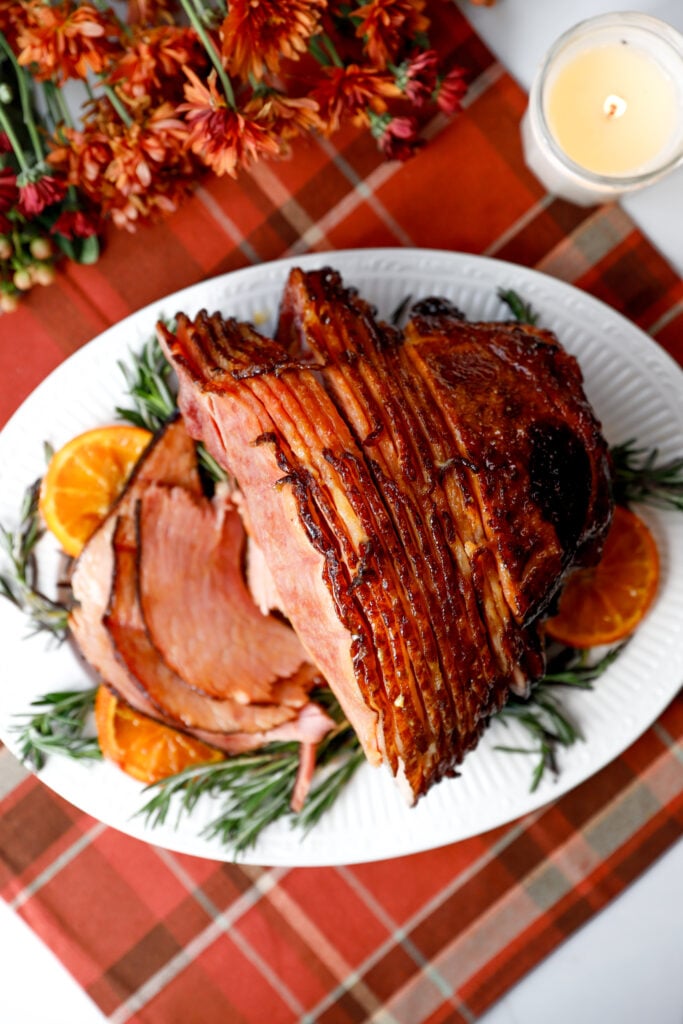
These buttery rolls are right at home alongside my Brown Sugar Glazed Ham and Creamy Mashed Potatoes. Add my Autumn Brussels Sprouts Slaw with Citrus Vinaigrette for something fresh and crunchy to balance the richer dishes.
More Thanksgiving Side Dishes
Round out your holiday menu with a few more of our favorites:
Parker House Rolls with Sage Brown Butter
Ingredients
Dough
- 1 1/3 cups whole milk
- 1/2 cup unsalted butter cut into pieces
- 1/3 cup granulated sugar
- 1/2 cup warm water approximately 105–110°F
- 2 1/4 teaspoons active dry yeast one 1/4 ounce packet
- 3 large eggs at room temperature and lightly beaten
- 1 1/2 teaspoons kosher salt
- 5 3/4 cups all purpose flour spooned and leveled, plus a little for dusting
- Butter or cooking spray for greasing the bowl and pan
Sage Brown Butter
- 1 1/8 cups unsalted butter (2 sticks plus 2 tablespoons)
- 10 –12 medium fresh sage leaves washed and thoroughly dried
- Flaky sea salt for finishing
Whipped Sage Brown Butter
- 1/3 cup finished sage brown butter reserved from above
- 1/2 cup unsalted butter softened
- 1/4 teaspoon fine salt or to taste
Method
- Heat the milk in a small saucepan until it just begins to simmer. Remove from the heat. Stir in the 1/2 cup butter and sugar until melted. Let cool until lukewarm, approximately 100–110°F.
- Stir the warm water (105–110°F) and yeast together in a small bowl. Let stand for 5–10 minutes, until foamy.
- Add the milk mixture, yeast mixture, eggs, kosher salt, and about half the flour to a stand mixer fitted with a dough hook. Mix on low until combined. Gradually add the remaining flour.
- Knead on medium low speed until smooth and elastic, approximately 6–10 minutes. The dough should feel soft and slightly tacky and pass the windowpane test.
- Gently tuck the edges of the dough underneath with your hands to form a ball with a smooth, rounded top. Place in a lightly greased bowl and turn to coat. Cover and let rise until doubled, approximately 60–90 minutes, or longer in a cool kitchen.
- While the dough rises, melt the 1 cup plus 2 tablespoons butter in a large, light colored skillet over medium low heat. Add the fresh sage leaves, thoroughly patted dry, stirring frequently. Remove the leaves once crisp, then continue cooking until the milk solids are golden brown and the butter smells nutty. Immediately transfer to a heatproof bowl, scraping in the browned bits.
- Stir the brown butter well, then measure 1/3 cup into a separate bowl for the whipped butter. Let the remaining butter cool until no longer hot but still brushable.
- Prepare the pan. Grease a 9 by 13 inch baking pan and line with parchment paper.
- Gently punch the dough down and transfer to a lightly floured surface. Roll into a 12 inch square. If it springs back, cover and rest for 5–10 minutes. Stir the brown butter and brush approximately 3 tablespoons evenly over the dough.
- Cut into three 4 inch wide strips. Cut each strip into six 4-by-2-inch rectangles, making 18 pieces. Fold each rectangle in half so the short ends meet without pinching closed. Stand in the pan with the folded edge facing up and the paired short ends resting on the bottom. Arrange in three rows of six.
- Brush the tops lightly with approximately 2 tablespoons brown butter, reserving the remainder for after baking. Cover loosely and let rise until very puffy and approaching the top of the pan, approximately 45–75 minutes.
- Near the end of the rise, preheat the oven to 350°F. Uncover the rolls and sprinkle lightly with flaky salt. Bake for 35–40 minutes, until golden brown and a thermometer inserted into the bread of a center roll reads approximately 190°F. Loosely tent with foil if the tops brown before the center is done.
- Stir the remaining brown butter and brush over the hot rolls. Let rest for 5–10 minutes before serving.
- Cool the reserved 1/3 cup brown butter until opaque and soft, refrigerating briefly if needed. Add the 1/2 cup softened butter and fine salt. Beat with a hand mixer for 3–5 minutes, scraping the bowl, until light and fluffy. Taste and adjust the salt. Serve with the warm rolls.
Notes
- Time needed: Allow approximately 3½ hours total, including about 2 hours for rising. Rising may take longer in a cool kitchen.
- Butter temperatures: The dough butter can be cold. The butter added to the whipped serving butter must be softened.
- Brown butter yield: Water evaporates during browning. Reserve the ⅓ cup serving portion first, then use thin coatings for the rolls, keeping some for the finish.
- Whipped butter yield: Approximately 1 cup, depending on how much air is incorporated.
- Make ahead: Cool baked rolls completely, wrap tightly, and freeze. Thaw wrapped at room temperature, remove plastic, and warm covered with foil at 300°F for approximately 15–20 minutes.
- Whipped butter storage: Refrigerate covered for up to 3 days. Let soften and briefly rewhip before serving.






What did you think?